

Uniform shirts
Specify short or long sleeves, collar, chest pockets, epaulettes, shirt length and tuck-in allowance. Review the pattern and reinforcement in a sample.
Explore Uniform shirtsProposed range — confirm production scope in your brief.
WHATSNEXT APPARELS · RANGE DEVELOPMENT
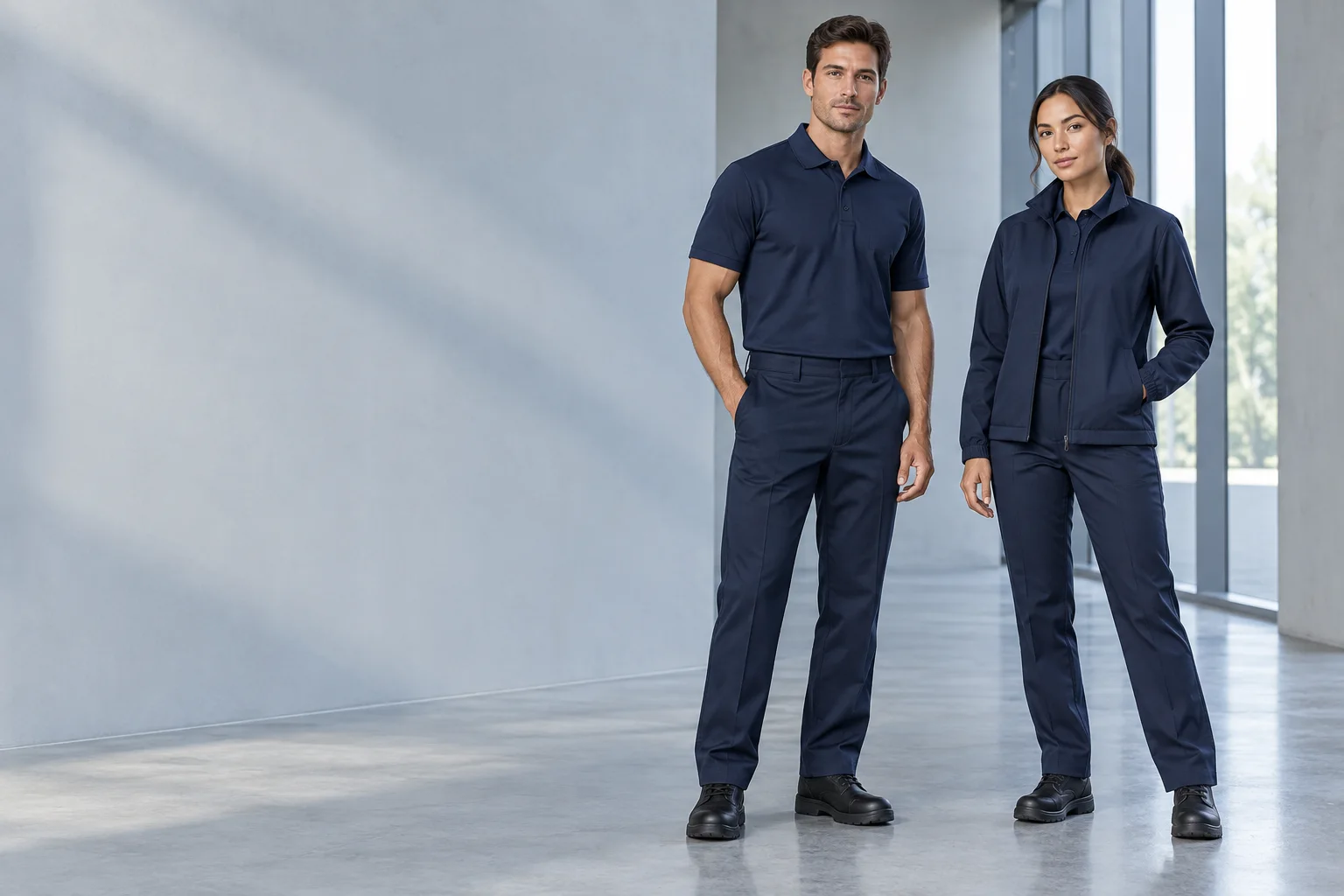
This proposed range helps define ordinary uniform requirements. Garment families, construction and production capability need confirmation before an order is offered.
Discuss your project Discuss a sampleYOUR BUYING DECISIONS
Specify short or long sleeves, collar, chest pockets, epaulettes, shirt length and tuck-in allowance. Review the pattern and reinforcement in a sample.
Explore Uniform shirtsProposed range — confirm production scope in your brief.

Compare knit weight and handfeel; define collar, placket, sleeve and hem fit. Ask how embroidery or identification will behave on the selected knit.
Explore Security polosProposed range — confirm production scope in your brief.

State waist, rise, seat, inseam and hem dimensions, with sitting and walking requirements. Agree pocket access, belt width and allocation by wearer block.
Explore Duty trousersProposed range — confirm production scope in your brief.

Mark pocket position, closure and intended carried items. Review loaded-pocket comfort, seam reinforcement and leg shape before approving the pattern.
Explore Cargo trousersProposed range — confirm production scope in your brief.

Define coverage, inseam, waistband, pocket layout and shift conditions. Confirm whether this garment suits your workplace dress requirements.
Explore Security shortsProposed range — confirm production scope in your brief.

Specify the intended layering allowance, collar, cuffs and pocket access. Request actual fabric construction; the concept does not establish weather protection.
Explore Softshell jacketsProposed range — confirm production scope in your brief.

Compare available fleece weights and finishes, then define layering ease, zip length and branding positions. Review pilling and care requirements with the material supplier.
Explore Fleece and midlayersProposed range — confirm production scope in your brief.

Describe rainfall exposure, coverage and layering. Any waterproof, seam-sealing or visibility requirement needs a confirmed construction and relevant test evidence.
Explore RainwearProposed range — confirm production scope in your brief.

State climate, mobility and underlayers; discuss insulation, lining, closures and hem coverage. Temperature ratings require product-specific evidence.
Explore Insulated jacketsProposed range — confirm production scope in your brief.

Specify identification panel size, wearer layers, openings and adjustment. These are ordinary fabric garments; protective or visibility standards require separate confirmation.
Explore Identification vests and tabardsProposed range — confirm production scope in your brief.

Define jacket silhouette, lapel, lining, buttons and coordinated trouser appearance. Approve fit, shade matching and badge positions using a physical sample.
Explore Formal security uniformsProposed range — confirm production scope in your brief.

List caps, beanies or other fabric accessories separately, with dimensions, adjustment and logo placements. Confirm each item’s sourcing and order minimum.
Explore Headwear and accessoriesProposed range — confirm production scope in your brief.
YOUR BUYING DECISIONS
YOUR BUYING DECISIONS
YOUR BUYING DECISIONS
YOUR BUYING DECISIONS
YOUR BUYING DECISIONS
YOUR BUYING DECISIONS
The site publishes a company-level 50-piece minimum. Ask how it applies to shirts, trousers, layers, colours, size mixing and decoration; a new uniform program may have separate material minimums.
Send a reference garment and the points you need to retain. Ask for pattern comparison, physical colour approval and the agreed limits before treating a replacement as equivalent.
Describe climate, wear tasks, desired appearance and care. Request actual composition, GSM and swatches; fabric construction alone does not prove protection or industrial-laundry suitability.
List each feature and its location in the brief. Supported construction and reinforcement must be confirmed and reviewed in a prototype.
Provide a physical colour target. Different knits and wovens may need separate shade approval; screen colours cannot guarantee a match.
Share artwork, placement and dimensions. Ask which methods, backing and name-tape or patch options suit the chosen fabric, then approve a decorated sample.
Request the actual pattern blocks, grading scope and style-specific measurement chart. Availability is not implied by extending a letter-size list.
Specify which garments and sizes you need to trial. Sample fees, contents, revisions and any return policy require confirmation in the quotation.
State the exact wash regime. Suitability must be established for the finished decorated garment; it cannot be inferred from a polyester/cotton description.
Ask which style, colour, material and trim references will be retained, and confirm top-up minimums, supply continuity and shade limits.
This proposed page covers ordinary uniform briefs. High-visibility, flame, ballistic or stab protection requires separately documented products and evidence; a reflective trim or uniform image is insufficient.
Quantities, patterns, fabrics, decoration, approvals and packing affect the quote. Confirm dispatch and destination transit separately; requested dates are not guarantees.
YOUR BUYING DECISIONS
Tell us your garments, intended use, style and colour quantities, destination and the decisions you need help with. Materials, construction, minimums and delivery are agreed for the exact enquiry.
Request a uniform program reviewIllustrations show design directions. They do not establish available products, performance, certification or factory equipment.